
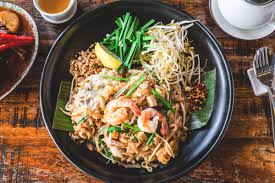
Pad Thai is perhaps one of the most recognized dishes representing Thailand on the global culinary stage. Known for its harmonious balance of flavors—sweet, sour, salty, and umami—this stir-fried noodle dish has become synonymous with Thai cuisine. Beyond its delectable taste, Pad Thai embodies the rich history, cultural significance, and creativity of Thai cooking, making it not only a national favorite but also a worldwide culinary icon.
The origins of Pad Thai date back to the early 20th century, during the era of Prime Minister Plaek Phibunsongkhram. At the time, Thailand faced economic challenges, and the government encouraged citizens to embrace rice noodles as a staple meal while promoting nationalism through Thai cuisine. Street vendors responded by creating a dish that was inexpensive, filling, and flavorful: Pad Thai. It consisted of rice noodles stir-fried with eggs, tofu, shrimp or chicken, bean sprouts, and flavored with tamarind paste, fish sauce, palm sugar, and chili. Crushed peanuts were added as a garnish to provide texture and depth of flavor. Over time, Pad Thai evolved from a wartime innovation into a beloved dish celebrated across the country and beyond.
One of the hallmarks of Pad Thai is its remarkable balance of taste. Thai cuisine is renowned for harmonizing sweet, sour, salty, bitter, and spicy elements, and Pad Thai exemplifies this principle perfectly. Tamarind paste provides a subtle tang, palm sugar adds sweetness, fish sauce contributes umami and saltiness, and chili offers a mild heat. The combination of these ingredients with fresh vegetables, protein, and noodles creates a dish that is simultaneously complex and approachable. This flavor harmony is a defining feature that has captivated locals and international diners alike.
Pad Thai’s cultural significance extends beyond its culinary appeal. It is commonly sold by street vendors throughout Thailand, particularly in Bangkok, and has become an integral part of everyday life. Eating Pad Thai is not merely about nourishment—it is an experience that brings people together, whether at bustling markets, roadside stalls, or casual family dinners. The preparation and presentation of Pad Thai also reflect Thai values of skill, patience, and attention to detail. Stir-frying noodles requires careful timing to ensure the perfect texture: the noodles must remain slightly chewy, the sauce evenly coats each strand, and the ingredients must retain their freshness and flavor.
In addition to its domestic popularity, Pad Thai has achieved remarkable international recognition. The dish is often the first Thai meal that travelers experience, introduced to them at restaurants across Asia, Europe, North America, and beyond. Its global appeal can be attributed to both its flavor profile and versatility. Chefs worldwide have adapted Pad Thai to suit local tastes while maintaining its essential character. Variations now include vegetarian options, seafood-centric renditions, and even fusion recipes that blend Thai flavors with Western or other Asian cuisines. This adaptability has allowed Pad Thai to transcend its street food origins and thrive in both casual and fine dining contexts internationally.
Pad Thai also serves as a symbol of Thailand’s rich culinary heritage. Beyond being a dish, it represents the ingenuity of Thai cooks in blending local ingredients and flavors to create something uniquely satisfying. The use of rice noodles highlights the significance of rice in Thai culture, while the mix of proteins, vegetables, and spices reflects Thailand’s agricultural diversity and abundance. The dish’s popularity in international settings has positioned it as a culinary ambassador, introducing millions of people to Thai traditions, flavors, and cooking techniques.
Moreover, Pad Thai evokes a sense of nostalgia and pride among Thai people. Many remember learning to cook the dish at home from their parents or enjoying it at neighborhood markets with friends. It is a dish that bridges generations, reminding people of family meals, street food adventures, and the shared joy of eating together. This emotional connection reinforces Pad Thai’s role not only as a meal but also as a cultural touchstone.
In conclusion, Pad Thai is much more than a plate of stir-fried noodles—it is a reflection of Thailand’s history, culinary artistry, and cultural identity. From its roots as a government-promoted, inexpensive street food to its current status as a globally celebrated dish, Pad Thai continues to captivate people with its flavor, versatility, and cultural resonance. Whether enjoyed at a bustling street stall in Bangkok, a family kitchen in Chiang Mai, or a restaurant halfway across the world, Pad Thai stands as a delicious and enduring symbol of Thailand’s rich culinary heritage and the universal language of food.