
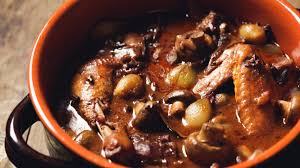
Coq au Vin is one of France’s most celebrated traditional dishes, honored for its rich flavors, rustic origins, and deep cultural significance. Though now considered a hallmark of classic French gastronomy, Coq au Vin was once a humble rural recipe born from necessity, resourcefulness, and the timeless pairing of chicken and wine. Today, it represents the essence of French cooking—slow, deliberate preparation, respect for ingredients, and the belief that even the simplest foods can become extraordinary with care and craftsmanship.
The history of Coq au Vin can be traced back centuries, long before it was documented in cookbooks or featured in fine French restaurants. Its origins lie in rural France, where farming communities often relied on older roosters that were too tough for quick cooking. Rather than waste them, chefs and home cooks braised the birds slowly in wine, allowing the acidity and tannins to tenderize the meat while infusing it with deep, complex flavors. Although Burgundy is often credited as the birthplace of the dish—thanks to its famous red wines—variations of Coq au Vin were prepared throughout France, each region adapting the recipe to its local ingredients and culinary traditions.
As French cuisine evolved, Coq au Vin transformed from a rustic farmhouse meal into a refined culinary classic. The dish gained widespread recognition in the 20th century through chefs who championed traditional French cooking, most notably Julia Child, who introduced Coq au Vin to American audiences in the 1960s. Her popularization of the dish showcased the beauty of French slow cooking, helping cement Coq au Vin as a global symbol of the elegance and sophistication of French gastronomy.
At the heart of Coq au Vin is its iconic combination of chicken, wine, onions, mushrooms, lardons, garlic, herbs, and a long, slow simmering process. Traditionally, Burgundy red wine is used, imparting richness and depth, while the braising technique allows the flavors to meld into a velvety, aromatic sauce. The addition of bacon (or lardons) contributes smokiness, while mushrooms and pearl onions add earthiness and sweetness. Each ingredient plays a vital role, reflecting the French culinary philosophy that balance, harmony, and technique are the keys to great cooking.
Culturally, Coq au Vin embodies more than culinary tradition—it represents the French values of patience, resourcefulness, and respect for local produce. For centuries, French households thrived on seasonal ingredients and slow-cooked meals that brought families together around the table. Coq au Vin was often prepared on weekends or holidays, when families had time to devote to a dish that required hours of careful cooking. This tradition reinforces the belief that food is not merely sustenance but an experience, a shared moment of comfort and connection.
The regional diversity of Coq au Vin also highlights the richness of French culinary heritage. While the Burgundy version is the most famous, several regions offer their own interpretations:
-
Coq au Vin Jaune, from the Jura region, uses the region’s distinctive yellow wine.
-
Coq au Riesling, from Alsace, replaces red wine with aromatic Riesling for a lighter, creamier dish.
-
Coq au Champagne, from the Champagne region, substitutes sparkling wine for an elegant twist.
These variations reflect the French principle that cuisine should honor the land and the unique flavors it produces.
Beyond its borders, Coq au Vin has achieved international acclaim as a symbol of classic French cooking. Its reputation has been strengthened by the global influence of French culinary schools, Michelin-starred restaurants, and media personalities who continue to celebrate the dish’s traditional charm. Today, it can be found in fine dining establishments as well as home kitchens around the world, prepared by both seasoned chefs and enthusiastic home cooks. Its global popularity underscores its universal appeal—a dish that is comforting, flavorful, and deeply rooted in cultural tradition.
Despite its widespread recognition, Coq au Vin has stayed true to its humble origins. It remains a dish that rewards patience and honors the beauty of simple ingredients. Its enduring legacy lies in its ability to connect the past and present, bridging centuries-old traditions with modern culinary appreciation. For many, preparing Coq au Vin is not just cooking—it is participating in a longstanding French ritual that celebrates the artistry of slow cooking and the joy of sharing food with loved ones.
Coq au Vin stands as a timeless culinary treasure that encapsulates the heart of French gastronomy. Its rustic beginnings, cultural significance, regional variations, and global influence demonstrate its lasting appeal and importance in the world of food. Whether enjoyed in a rustic French village, a Parisian bistro, or a modern home kitchen anywhere in the world, Coq au Vin continues to honor France’s culinary traditions with every rich, aromatic bite. It remains a beloved classic, celebrated for its history,