
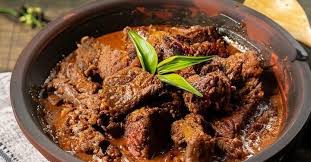
Rendang, one of Indonesia’s most celebrated culinary treasures, has long captivated food enthusiasts around the world. Known for its rich flavors, slow-cooked technique, and deep cultural symbolism, rendang represents far more than just a delicious dish—it is a reflection of the Minangkabau people’s identity, philosophy, and heritage. Over the past decades, this traditional food from West Sumatra has gained international recognition, consistently ranking among the world’s best dishes and becoming a culinary ambassador for Indonesia on the global stage.
At its core, rendang is a slow-cooked beef dish simmered in a blend of coconut milk and a fragrant mixture of herbs and spices such as lemongrass, galangal, garlic, turmeric, ginger, and chili. What makes rendang unique is its cooking process: the mixture is simmered for hours until the liquid evaporates, leaving tender meat coated in a thick, flavorful paste. This technique not only infuses the beef with intense flavor but also serves as a natural preservative—allowing rendang to last for days or even weeks without refrigeration. Historically, this made it an ideal dish for travelers, traders, and members of the Minangkabau diaspora, who often journeyed far from their homeland.
Rendang’s global appeal is tied not only to its taste but also to its adaptability. While the traditional Minangkabau version uses beef, variations across Indonesia and beyond incorporate chicken, duck, jackfruit, or even egg. As Indonesian communities migrate and establish themselves in different countries, they bring rendang with them—introducing it to new cultures and inspiring fusion recipes in international restaurants. Today, rendang is a popular dish served in Southeast Asian eateries, featured in global food festivals, and showcased by celebrity chefs. Its complex flavor profile—simultaneously spicy, savory, and aromatic—has made it a favorite among culinary experts who appreciate dishes that tell a story through taste.
However, rendang’s significance extends far beyond its culinary value. For the Minangkabau people, who originate from West Sumatra and are known for their matrilineal society, rendang symbolizes important cultural principles. It is often served during major ceremonies, celebrations, and communal gatherings, reflecting unity, respect, and social hierarchy. Traditionally, each ingredient in rendang was thought to represent an aspect of Minangkabau society: the meat symbolizes leaders or elders, coconut milk represents intellectuals, and the spices stand for the broader community. As such, rendang can be seen as a metaphor for harmony and social structure.
Furthermore, the long cooking process used to make rendang embodies patience, resilience, and dedication—values deeply rooted in Minangkabau culture. Preparing rendang is often a communal activity, especially during important rituals such as weddings, Eid celebrations, and cultural festivals. Families and communities come together to chop ingredients, tend the fire, and stir the pot for hours. This collaborative effort strengthens relationships and reinforces cultural traditions from one generation to the next. In many Minangkabau households, the ability to cook rendang well is considered a point of pride and a sign of culinary mastery.
In modern Indonesia, rendang has become a national icon that unites people from diverse regions. It represents not only the culinary richness of West Sumatra but also the broader cultural diversity of the archipelago. The dish has been featured by Indonesian diplomats abroad, used in cultural exhibitions, and promoted in tourism campaigns. For many Indonesians living overseas, rendang serves as a nostalgic reminder of home—evoking memories of family gatherings, cultural events, and traditional values.
Internationally, rendang continues to attract attention for its unique combination of flavor and heritage. Food critics often describe it as a “perfect example of traditional cooking elevated to global fame.” As interest in Southeast Asian cuisine grows, rendang stands as a powerful symbol of Indonesia’s contributions to global culinary culture. Whether enjoyed in a traditional Minangkabau household or discovered in a restaurant halfway across the world, rendang remains a testament to Indonesia’s rich history, cultural depth, and culinary artistry.